
 Best Forex Brokers in Indonesia


 Scam Forex Brokers in Indonesia




NASDAQ forex Brokers

Cryptocurrency Trading platforms

Volitality 75 Forex Brokers

How to Buy Bitcoin

Pros and Cons of Forex Trading

How to Start Trading in Indonesia?

Currency Pairs

Forex Trading Basics

Forex Terminology

Forex Charting

Forex Trading Risk Management

Forex Trading Strategies

Forex Trading Platforms

Best Forex Brokers in Indonesia
Pros and Cons of Forex Trading
How to Start Trading in Namibia?
Currency Pairs
Forex Trading Basics
Forex Terminology
Forex Charting
Forex Trading Risk Management
Forex Trading Strategies
Forex Trading Platforms
Best Forex Brokers in Namibia









In this comprehensive guide, you’ll learn all you need to know about being a great trader and which forex brokers in Indonesia are best suited for your trading style. Indonesian traders can easily start earning profits from the competitive, exciting environment of forex trading.
 Indonesia, known as the World’s Largest Archipelago with its extensive geography encompassing more than 17,000 islands, significantly impacts its currency market. The wide range of economic activities across these islands gives rise to exceptional trading prospects and hurdles within the forex market.
The forex trading industry in Indonesia has experienced a remarkable surge over the past ten years, witnessing unprecedented growth among individual and institutional traders. This expansion can be attributed to technological advancements, enhanced financial knowledge, and favourable economic circumstances.
Forex trading in Indonesia is effectively supervised and controlled by the Commodity Futures Trading Regulatory Agency (BAPPEBTI) on behalf of the government. This proactive approach aims to establish a safe and transparent atmosphere, shielding traders from potential fraudulent activities while promoting trust within the market.
Indonesia offers accessibility in forex trading with the presence of numerous reputable brokers, serving both international and local audiences. These brokers, operating through online platforms and physical locations, cater to traders at every experience level.
The economic importance of Forex trading in Indonesia is evident through its substantial contributions to the country’s financial market and overall global economy. The significant liquidity and high volume associated with this form of trading are crucial factors that influence exchange rates of international trade and shape various economic policies.
How profitable is Forex trading for individuals and retail traders? How much do you need to start trading Forex in Indonesia? Can you keep your full-time job while you trade Forex part-time? What are the significant risks involved with trading Forex in Indonesia?
These are just a few questions that many Indonesian traders may have as beginner forex traders. Explore our website to find the answers to these questions and more.
BAPPEBTI, often known as the Commodity Futures Trading Regulatory Agency, is an agency of the Indonesian Ministry of Trade. It is in charge of regulating and monitoring commodities futures transactions, including Forex trading.
BAPPEBTI guarantees that brokers follow the rules, provide clear information about their products and services, and provide proper investor protection.
While the BAPPEBTI does not officially regulate forex brokers who carry out financial activities, regulators such as the FSCA, FCA, CySEC, and others protect Indonesians.
We reveal the best brokers with verified regulations who offer their services locally in Indonesia. Indonesians can rest assured that these are trusted and legitimate brokers that garner a high trust score or rating.
Step-by-Step on How to Start Trading Forex in Indonesia
Step 1 – Learn about Forex Trading
Step 2 – Learn the Basic Forex Trading Terminology
Step 3 – Register a Demo Account with A Broker of Your Choice
Step 4 – Learn about the Risks of Forex Trading
Step 5 – Learn about different Trading Strategies
Step 6 – Use Your Demo Account to Practise Trading
Step 7 – Register a Real Account When You Are Ready
Step 8 – Choose a Trading Platform
Step 9 – Deposit Funds into the Account and Start Trading
 Step 1 – Learn about Forex Trading
Before commencing this financial endeavour, gaining a thorough understanding of the notion of forex trading is critical.
Forex trading is the exchange of different currencies against one another in the worldwide foreign exchange market, which has a staggering daily trading volume of more than $6 trillion.
Traders attempt to forecast currency exchange rate swings to profit. Many learning tools, such as online courses, e-books, and articles, are readily available to help in this educational endeavour.
Step 2 – Learn the Basic Forex Trading Terminology
A full understanding of important terminologies used in forex trading is required to navigate this market competently. These are some of the terms:
Base Currency: The currency that is quoted first in a currency pair.
Quote Currency: The second currency in a quoted currency pair.
Exchange rate: The value of one currency to another.
Long Position: A strategic move in which a trader acquires the base currency expecting a value increase.
Short position: A strategic manoeuvre in which a trader sells the base currency in anticipation of its value falling.
Step 3 – Register a Demo Account with A Broker of Your Choice
Obtaining practical experience through a demo account is prudent before committing genuine funds.
This risk-free simulation helps ambitious traders become acquainted with the trading platform, perfect their abilities, and understand the complexities of forex trading. When choosing a brokerage, it is critical to consider regulation, user-friendly interfaces, and great customer service.
Step 4 – Learn about the Risks of Forex Trading
Forex trading entails inherent dangers, notably potential financial losses due to market volatility, leverage utilization, and insufficient trading competence. Traders must understand and successfully manage these risks, using stop-loss orders to limit possible losses.
Step 5 – Learn about different Trading Strategies
Forex trading employs a variety of trading strategies, each catering to different trading objectives and risk tolerance levels:
Day Trading: This approach, consisting of many daily deals, necessitates significant effort and time but can return huge gains.
Swing trading entails maintaining positions for multiple days to profit from price changes.
Position Trading: A long-term strategy in which trades are held for longer periods, ranging from days to months and even years.
Each technique has advantages and disadvantages; the best relies on personal tastes and goals.
Step 6 – Use Your Demo Account to Practice Trading
Leverage the demo account as a valuable tool for experimenting with and honing your newly developed trading strategies. This hands-on experience will provide invaluable insights into the functionality of these tactics under real-world market conditions.
Step 7 – Register a Real Account When You Are Ready
Once aspiring traders have cultivated a sense of confidence in their trading methods and acquired a profound understanding of the associated risks, they can confidently take the next step and open an authentic trading account.
To approach this endeavour prudently, it is advisable to commence with conservative investments and progressively amplify them as one’s expertise and market knowledge grow.
Step 8 – Choose a Trading Platform
Choosing an appropriate trading platform is critical to ensure a smooth trading experience. MetaTrader 4 and MetaTrader 5 are two prominent solutions offering cutting-edge charting features, market indicators, and automated trading capabilities.
When making this essential decision, consider usability, features, and compatibility.
Step 9 – Deposit Funds into the Account and Start Trading
After creating the account, traders can fund it and begin their trading trip. Bank transfers, credit cards, and electronic wallets are common deposit methods reputable brokers use. It is critical to closely monitor deals and avoid investing cash above one’s financial capacity.
4 Best Currency Pairs for Beginner Indonesians to Trade
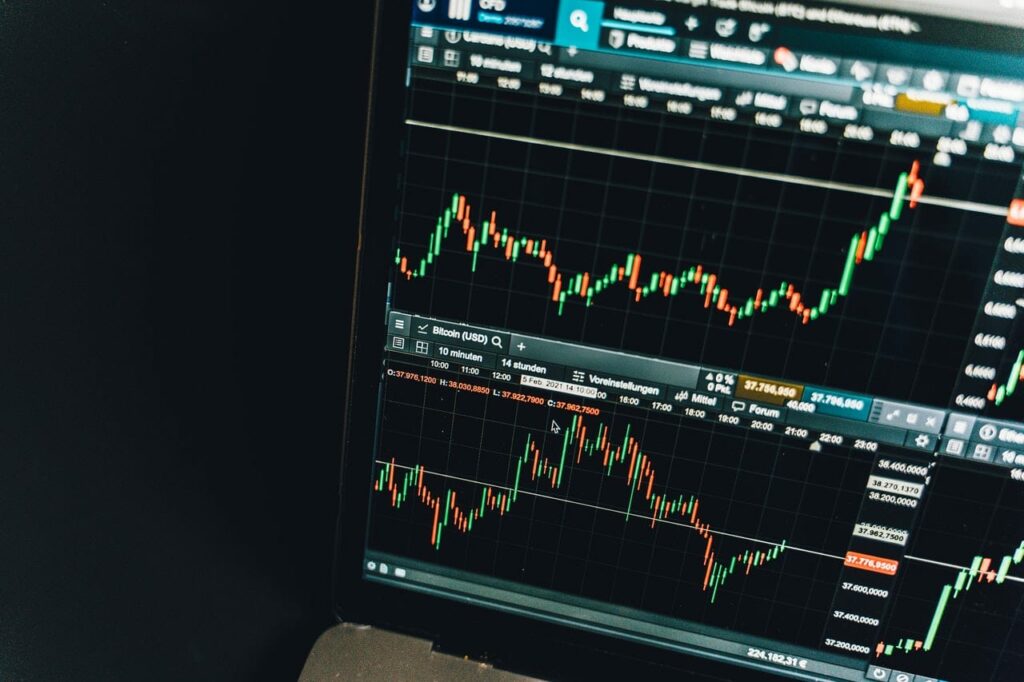
USD/JPY (US Dollar/Japanese Yen)
The USD/JPY pair might be an ideal starting point for new traders in Indonesia. This pair represents the exchange rate between the US dollar and the Japanese yen.
Because the US dollar is a prominent worldwide currency and Japan is a major trading partner of Indonesia, information and analysis on this pair are widely available. The USD/JPY currency pair has low volatility, making it good for inexperienced forex traders.
EUR/USD (Euro/US Dollar)
The EUR/USD currency pair is highly recommended for newbies as it represents the Euro and US Dollar exchange rates. Due to their significant roles in the global economy, economic events occurring in both regions can significantly affect this particular currency pairing.
Beginners should primarily focus on familiar currencies and worldwide economic matters while trading EUR/USD.
Understanding key factors such as the European Central Bank’s policies, the Federal Reserve’s initiatives, and notable economic indicators can greatly influence one’s trading decisions.
AUD/USD (Australian Dollar/US Dollar)
The currency pair AUD/USD represents the Australian and US Dollars. This pair may be more predictable for Indonesian newcomers because of Australia’s close physical and economic ties with the Asia-Pacific region.
Commodity prices, interest rates, and trade agreements between Australia and other countries can all impact the AUD/USD exchange. Following global economic news and regional trends might assist rookie traders in making sound trading judgments.
GBP/USD (British Pound/US Dollar)
The “Cable” currency pair indicates the British Pound and the US Dollar exchange rate. This pair is appropriate for novices because of its high liquidity and thorough research and information.
Indonesian traders can trade this pair by observing UK economic indicators, Bank of England decisions, and US economic situations. The GBP/USD currency pair can show distinct trends and is influenced by factors such as interest rates, political changes, and global economic events.
4 Best Currency Pairs for Professional Indonesians to Trade

USD/JPY (US Dollar/Japanese Yen)
The USD/JPY pair provides opportunities for more complex strategies for professional traders in Indonesia. This significant currency pair is highly liquid and is susceptible to global economic events, interest rate differentials, and geopolitical tensions.
Professional traders can trade the USD/JPY using technical analysis, macroeconomic trends, and global market insights. Its increased volatility may present greater profit opportunities but requires prudent risk management.
EUR/USD (Euro/US Dollar)
The EUR/USD is one of the most actively traded currency pairs worldwide and provides professionals in Indonesia with access to the global forex market. Both Eurozone and US economic indicators influence this currency combination.
Understanding global economic trends, interest rate policies, and geopolitical events is necessary for trading the EUR/USD. Professional traders can use sophisticated trading strategies and financial instruments to profit from this pair’s movements.
GBP/USD (British Pound/US Dollar)
The GBP/USD currency pair indicates the exchange rate between the British Pound and the United States Dollar. It is a popular option among professional traders due to its liquidity and sensitivity to economic news from both the United Kingdom and the United States.
Professional traders can trade this pair by analyzing UK economic indicators, Bank of England decisions, and US economic conditions. The GBP/USD may present dynamic trading opportunities during significant economic announcements.
USD/CHF (US Dollar/Swiss Franc)
The stability of the USD/CHF currency exchange is widely recognized, earning it a reputation as a secure and dependable choice for traders seeking a safe haven.
In Indonesia, professional traders can trade this currency pair to enhance their portfolio diversification and minimize risks associated with market instability.
Several factors influence the decision-making process when trading this particular pair. These include staying informed about Swiss economic policies, monitoring global risk sentiment, and assessing US economic conditions.
By being aware of these elements that impact the USD/CHF currency pair’s performance, professionals can seize opportunities while managing potential volatility effectively.
With its unique blend of stability and profit potential capabilities combined within one pairing option, the USD/CHF suits skilled individuals who aim to mitigate risks through effective management strategies and maximize financial gains.
9 Best No-Deposit Forex Brokers in Indonesia
1. InstaForex

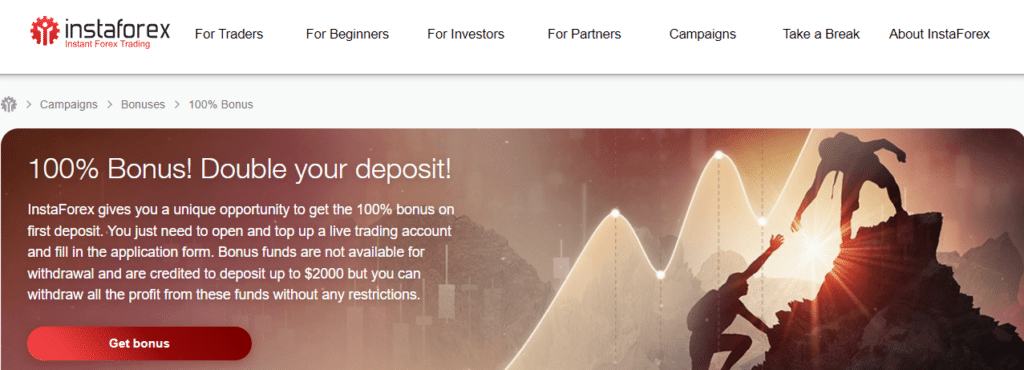
InstaForex offers a significant $1,000 no-deposit incentive to new clients in Indonesia. The bonus is promptly credited upon completion of account verification, allowing for quick trading.
InstaForex Overview
| 🔎 Broker | InstaForex |
| 📝 Regulation | BVI FSC, CySEC, FSA SVG, FCA |
| 💻 Trading Desk | MetaTrader 4, MetaTrader 5, WebIFX, InstaForex Multi-Terminal, InstaForex WebTrader, InstaTick Trader, InstaForex MobileTrader |
| 🎉 No Deposit Bonus | 1,000 USD / 15,706,000 IDR |
| ➖ Min. Deposit from | 1 USD / 15,715 IDR |
| 🔁 Spreads from | from 0 pips |
| ➕ Max Leverage | 1:1-1:1000 |
| 💳 Commission | 0.03% – 0.07% |
| 🚀 Open an Account | Open Account |
Pros and Cons
| ✔️ Pros | ❌ Cons |
| The $1,000 is extremely generous | The bonus is non-withdrawable and will expire when traders make their first withdrawal |
| Traders can withdraw profits they make over the bonus amount | Account verification can be complex |
| Indonesians can access a large range of trading tools and education | |
| Offers powerful trading software |
2. Admirals

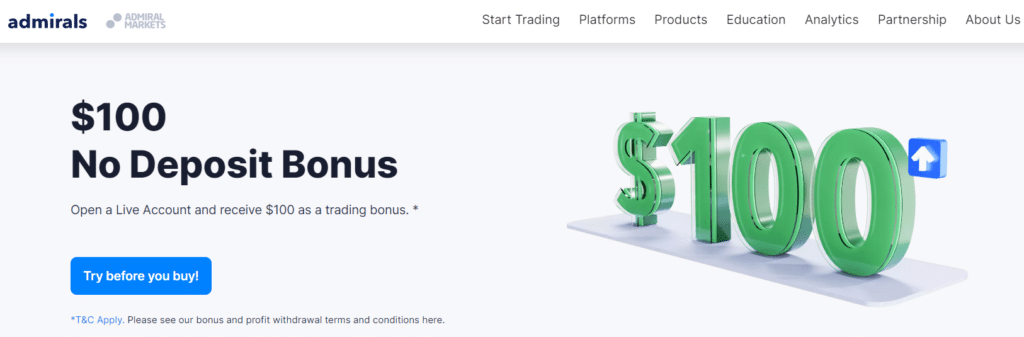
Admirals, formerly Admiral Markets, offers Indonesian traders a 100 USD “Special Bonus.” This bonus, valid for 30 days after receipt, improves trading by increasing available margin but does not compensate for trading losses.
Each trading account can only have one active bonus and specified trading volume requirements must be completed to withdraw or transfer funds. The Admirals’ bonus is a well-structured program that encourages careful trading.
Admirals Overview
| 🔎 Broker | Admiral Markets |
| 📝 Regulation | FCA, ASIC, CySEC, JSC, FSCA, FSA, CMA |
| 💻 Trading Desk | MetaTrader 4, MetaTrader 5, Admirals Mobile App |
| 🎉 No Deposit Bonus | 100 USD / 1,570,600 IDR |
| ➖ Min. Deposit from | 1 USD / 15,553 IDR |
| 🔁 Spreads from | 0.0 |
| ➕ Max Leverage | 1:1000 |
| 💳 Commission | Stocks & ETFs – from 0.02 USD per share |
| 🚀 Open an Account | Open Account |
Pros and Cons
| ✔️ Pros | ❌ Cons |
| Admirals is a trusted and well-regulated broker | Traders cannot use the bonus to offset losses |
| Indonesians can increase their margin for trading using the bonus | The bonus is only available for 30 days |
| There is a generous 100 USD no-deposit bonus offered with a decent validity period | There are strict requirements in place for withdrawals and internal transfers |
3. Tickmill

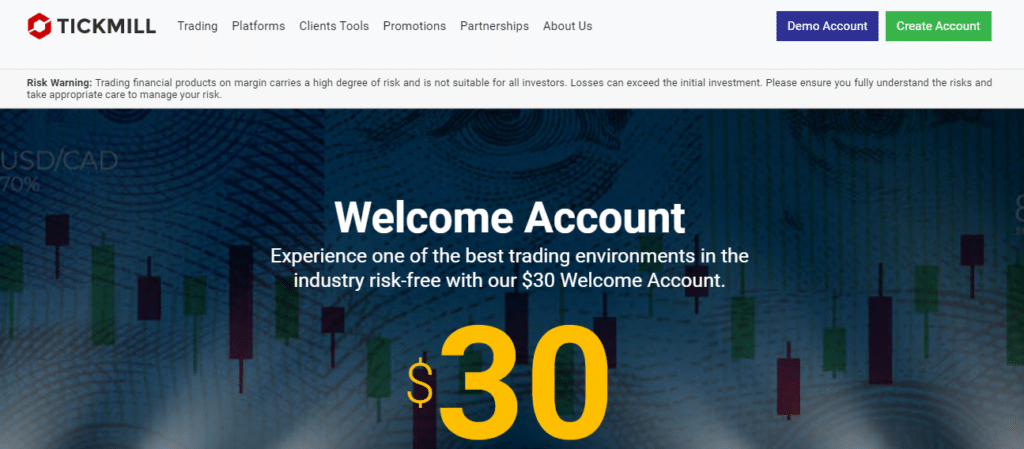
Tickmill, a well-known broker, offers a $30 Welcome Account to all new clients, including Indonesians. With this incentive, traders get access to a wide range of trading products, including Forex, stock indices, commodities, and bonds.
The withdrawal procedure is simple, requiring the completion of 5 standard lots and 20 round turn trades. Tickmill’s compensation system is geared toward novice and seasoned traders who want to experiment with different markets without making initial investments.
Tickmill Overview
| 🔎 Broker | Tickmill |
| 📝 Regulation | Seychelles FSA, FCA, CySEC, Labuan FSA, FSCA |
| 💻 Trading Desk | MT4, MT5, Tickmill Mobile |
| 🎉 No Deposit Bonus | 30 USD / 471,180 IDR |
| ➖ Min. Deposit from | 100 USD / 1,555,300 IDR |
| 🔁 Spreads from | 0 pips |
| ➕ Max Leverage | 1:500 |
| 💳 Commission | 2 per side per 100,000 traded |
| 🚀 Open an Account | Open Account |
Pros and Cons
| ✔️ Pros | ❌ Cons |
| All new clients are eligible for the 30 USD no-deposit bonus | Traders must trade at least 5 standard lots and 20 round-turn trades to be able to withdraw their bonus |
| Tickmill has transparent withdrawal conditions | There are limited bonus offerings when compared to other brokers |
| Several asset classes can be traded |
4. XM

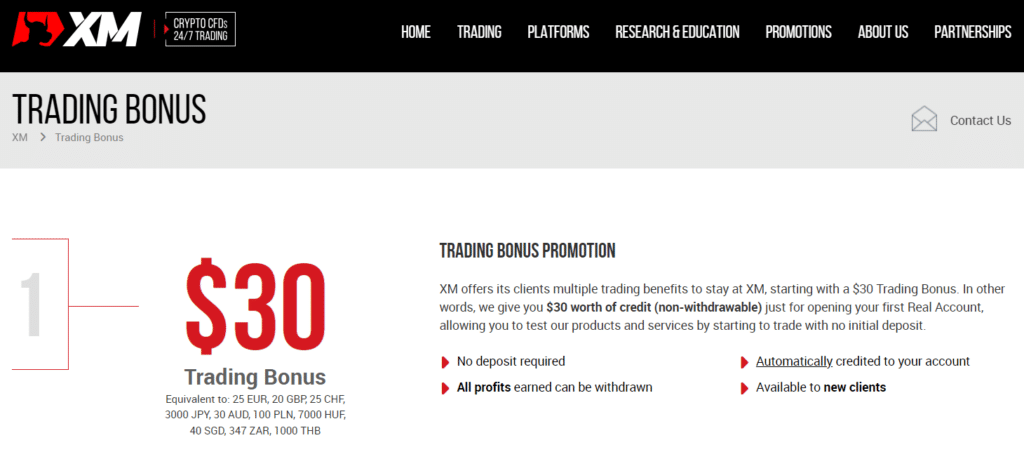
XM, a worldwide famous broker, provides new clients with a $30 no-deposit bonus. This offer is instantly credited without requiring a deposit, but withdrawing the bonus and any associated winnings requires trading at least 5 standard lots.
This offer is intended to attract new traders and provide an opportunity to learn about the trading environment at XM.
XM Overview
| 🔎 Broker | XM |
| 📝 Regulation | FSCA, IFSC, ASIC, CySEC, DFSA |
| 💻 Trading Desk | MetaTrader 4, MetaTrader 5, XM Mobile App |
| 🎉 No Deposit Bonus | 30 USD / 471,180 IDR |
| ➖ Min. Deposit from | 5 USD / 78,575 IDR |
| 🔁 Spreads from | 0 pips |
| ➕ Max Leverage | 1000:1 |
| 💳 Commission | None |
| 🚀 Open an Account | Open Account |
Pros and Cons
| ✔️ Pros | ❌ Cons |
| Newly registered traders get 30 USD once they verify a trading account | Specific regions are restricted from service |
| XM offers user-friendly programs and a large range of instruments | There is a high 5 standard lot trading volume requirement to withdraw the bonus |
| XM has an extremely strong regulatory framework |
5. SuperForex

SuperForex’s no-deposit bonus of 88 USD is available to all qualified clients and covers various account types.
This incentive gives flexibility and encourages continuing involvement by having no predetermined expiration date and the ability to collect the bonus again under specific conditions.
SuperForex Overview
| 🔎 Broker | SuperForex |
| 📝 Regulation | None |
| 💻 Trading Desk | MetaTrader 4, SuperForex App |
| 🎉 No Deposit Bonus | 88 USD / 1,382,128 IDR |
| ➖ Min. Deposit from | 1 USD / 15,715 IDR |
| 🔁 Spreads from | 0.5pips |
| ➕ Max Leverage | 1:1000 |
| 💳 Commission | 1% – 5% plus additional fees |
| 🚀 Open an Account | Open Account |
Pros and Cons
| ✔️ Pros | ❌ Cons |
| SuperForex is a trusted broker with robust customer support | The bonus is limited to new Prime Accounts |
| There is a 30 USD no-deposit bonus offered to all new live trading accounts | There are limited trading platforms compared to other brokers |
| Traders can register a multi-currency account |
6. ForexChief

The $100 no-deposit incentive from ForexChief provides an excellent opportunity for Indonesian traders to evaluate services and trading tactics.
A quick verification process, an infinite duration, acceptance of all trading techniques, and an easy withdrawal process for the bonus and winnings are among the key advantages.
The bonus structure is intended to give the best combination of flexibility and incentive for both novice and experienced traders.
ForexChief Overview
| 🔎 Broker | ForexChief |
| 📝 Regulation | VFSA |
| 💻 Trading Desk | MetaTrader 4, MetaTrader 5 |
| 🎉 No Deposit Bonus | 100 USD / 1,570,600 IDR |
| ➖ Min. Deposit from | 10 USD / 157,151 IDR |
| 🔁 Spreads from | from 0.9 pips |
| ➕ Max Leverage | 1:1000 |
| 💳 Commission | $2.5 / €2.5 / £2.5 |
| 🚀 Open an Account | Open Account |
Pros and Cons
| ✔️ Pros | ❌ Cons |
| Traders can use the ForexChief app to trade from anywhere | There is a complex procedure to withdraw the no-deposit bonus |
| There are no restrictions on trading strategies | |
| Traders can get a 100 USD no-deposit bonus that does not expire |
7. JustMarkets

JustMarkets caters particularly to Indonesian traders, offering a $30 Welcome Bonus via their unique “Welcome Account.” It offers trading in forex currency pairs and commodities denominated in USD to new clients and is limited to one bonus per client.
The bonus promotes a safe trading environment, encouraging users to explore the platform. Multiple bonus accounts are prohibited by strict restrictions, assuring fairness for all clients.
JustMarkets Overview
| 🔎 Broker | JustMarkets |
| 📝 Regulation | FSA |
| 💻 Trading Desk | MetaTrader 4, MetaTrader 5, JustMarkets App |
| 🎉 No Deposit Bonus | 30 USD / 471,180 IDR |
| ➖ Min. Deposit from | 10 USD / 156,953 IDR |
| 🔁 Spreads from | 0.3 pips |
| ➕ Max Leverage | 1:3000 |
| 💳 Commission | None |
| 🚀 Open an Account | Open Account |
Pros and Cons
| ✔️ Pros | ❌ Cons |
| Indonesians receive a 30 USD no-deposit bonus when they register | Only one welcome account allowed per client |
| Traders can register flexible trading accounts | There are limited markets to trade |
| JustMarkets has clear guidelines and bonus eligibility |
8. FreshForex

FreshForex’s innovative approach to no-deposit bonuses provides Indonesians with a 99 USD offer focusing on profit preservation within 7 calendar days.
The terms allow traders to protect their earnings by depositing an amount equal to or greater than their profits. FreshForex’s no-deposit bonus stands out in the market, catering to traders searching for a quick boost to their trading capital.
FreshForex Overview
| 🔎 Broker | FreshForex |
| 📝 Regulation | SVG ,FSA |
| 💻 Trading Desk | MetaTrader 4, MetaTrader 5 |
| 🎉 No Deposit Bonus | 99 USD / 1,554,894 IDR |
| ➖ Min. Deposit from | 0 USD / 0 IDR |
| 🔁 Spreads from | 0 pips |
| ➕ Max Leverage | 1:2000 |
| 💳 Commission | From 0.003% per contract |
| 🚀 Open an Account | Open Account |
Pros and Cons
| ✔️ Pros | ❌ Cons |
| FreshForex has competitive trading conditions and decent leverage ratios | There is a limited 7-day period tied to the bonus |
| FreshForex has prompt and friendly customer support | Traders must deposit or exceed the deposit with profits to keep it |
| Indonesians can earn a 99 USD no-deposit bonus when they register an account |
9. Windsor Brokers

New Prime Account clients at Windsor Brokers can avail themselves of a convenient $30 no-deposit bonus. Upon acceptance, the account receives free trading credit once the registration steps are completed.
This promotional offer is open to individuals in various currencies. It aims to provide an inviting atmosphere for beginners interested in real trading without any initial financial commitment.
Windsor Brokers Overview
| 🔎 Broker | Windsor Brokers |
| 📝 Regulation | FSC, CySEC, JSC, FSA, CMA |
| 💻 Trading Desk | MetaTrader 4, Windsor Brokers App |
| 🎉 No Deposit Bonus | 30 USD / 471,180 IDR |
| ➖ Min. Deposit from | 50 USD / 785,757 IDR |
| 🔁 Spreads from | 0 pips |
| ➕ Max Leverage | 1:1000 |
| 💳 Commission | $8 commission round turn |
| 🚀 Open an Account | Open Account |
Pros and Cons
| ✔️ Pros | ❌ Cons |
| Windsor Brokers is a trusted broker with robust customer support | The bonus is limited to new Prime Accounts |
| There is a 30 USD no-deposit bonus offered to all new live trading accounts | There are limited trading platforms compared to other brokers |
| Traders can register a multi-currency account |
5 Most Successful Forex Traders in Indonesia

Denny Omar
Denny Omar’s journey to trading success illustrates the strength of perseverance and a love of the financial markets. Despite having no professional expertise in finance or economics, he began FX trading as a self-taught man in 2005.
Denny’s outstanding work ethic and readiness to learn from mistakes have propelled him to the top of Indonesia’s trading ranks. His dedication to self-improvement and adaptation in the face of adversity is an example for prospective traders joining the business.
Eka Lesmana
With over 15 years of trading expertise, Eka Lesmana is well-known for his remarkable technical analysis abilities and keen ability to discover successful trading chances. His unwavering dedication to remaining current on market trends and the news keeps him one step ahead of his competitors.
Eka’s extensive trading expertise and deep understanding of market dynamics reinforce his image as an accomplished trader in Indonesia. Furthermore, his ongoing pursuit of information and efficient trading tactics distinguishes him as a significant resource within the trading community.
Sigit Purnomo
Originally from Cilacap, Sigit Purnomo rose to prominence after entering the forex trading industry in 2007. He is well-known for his successful forex trading tactics and emphasis on the importance of mentality in trading success.
Sigit’s insightful views and skills have led to the publication of several well-received forex trading books, further solidifying his name in the trading field. Furthermore, his prominent blog draws many traders who want to benefit from his experiences and knowledge.
Secundo Lee
Originally from Surabaya, Secundo Lee is noted for his distinct “Lazy Trader” trading technique. His methodology is notable for its novel approach to trading systems like Bulletproof, COMMO, and CATS.
Secundo Lee’s expertise and accomplishments culminated in successfully publishing a book that offers significant insights into these trading strategies. His innovative and practical trading style has gained him a big following and the respect of traders across the industry.
Rani Anggraeni
Rani Anggraeni’s success as a female trader in a male-dominated business demonstrates her tenacity and determination. She began her trading profession in 2008 and has become one of Indonesia’s most regarded traders.
Rani’s accomplishments under difficult market situations can be ascribed to her attention to maintaining a clear head and learning emotional control.
Her achievements serve as a role model for aspiring female traders, emphasizing the importance of overcoming hurdles and pursuing one’s passion in the financial markets.
Secrets to the success of these Professional Traders
Practical Experience: The combination of theoretical knowledge and practical experience is essential. Before investing real funds, many successful traders use demo accounts to learn the mechanisms of actual trading.
Control Emotions: Trading requires emotional discipline and the ability to make rational decisions. Even during market volatility, successful traders avoid making rash choices and adhere to their trading plans.
Diversification: Frequently, these traders diversify their portfolios by trading in various currency pairs and instruments. Diversification aids in risk mitigation and opportunity maximization.
Stay updated with Political and Economic Events: Successful traders closely monitor global economic and political events that can influence currency prices. They use this information to anticipate market movements and execute transactions promptly.
Continuous Learning: These traders recognize the need for continuous learning in forex trading. They devote time to comprehending market dynamics, trading sessions, and risk management solutions, among other things.
Strategic Approach: Successful traders in Indonesia have devised strategies specific to their trading instruments. They comprehend the market’s volatility and know when to enter or abandon trades.
Risk Management: Effective risk management is a characteristic shared by these traders. They understand how to balance potential gains and losses and protect their investments with stop-loss orders.
Adaptability: Successful traders are characterized by their ability to adapt to fluctuating market conditions and refine their trading strategies. They are adaptable and willing to modify their strategy in response to market trends and insights.
Use Technology: Utilizing advanced trading platforms and instruments, these traders can execute trades proficiently. They employ technology to analyze market trends and make intelligent decisions.
Selecting the Appropriate Broker: Cooperating with a trustworthy broker is essential for success. When choosing a broker, these traders prioritize narrow spreads, leverage options, and round-the-clock support.
How to Choose a Forex Broker in Indonesia
Customer Support
Customer service that is responsive guarantees that traders receive prompt assistance and guidance. Traders should look for 24-hour assistance and several communication methods, including chat, email, and phone.
Responsive customer service personnel and support in the local language can improve the trade experience and provide peace of mind.
Client Security and Fund Safety
Security measures to safeguard client information and payments are critical. Traders should seek features like encryption, two-factor authentication, and segregated accounts, which keep customer funds separate from the broker’s operations assets.
Furthermore, trust and confidence are built when a broker prioritizes client security and fund safety.
Regulation and Authorization
When choosing a Forex broker in Indonesia, regulation and permission are critical. Ensuring the broker is regulated by a recognized institution, such as the Financial Conduct Authority (FCA), and others, ensures legal compliance and protects traders from fraudulent activity.
Traders should ensure adequate licensing and conformity to local legislation and foreign regulations, which may apply.
Trading and Non-Trading Fees
Understanding the broker’s fee structure is critical for determining the entire cost of trading. Traders should seek clear information on spreads, commissions, overnight costs, and hidden fees.
A good grasp of trading and non-trading fees enables traders to make informed decisions and choose a competitive broker with optimal pricing.
Education and Research
Individuals can enhance their trading skills and make informed decisions using educational resources and research tools. Traders need to assess the availability of webinars, tutorials, market analysis reports, and research papers.
Brokers who actively invest in education and research foster continuous development among traders by providing ongoing learning opportunities.
Accounts and Features
Different account kinds cater to various trading requirements and preferences. Traders should look for a demo, Standard, ECN, and VIP accounts and comprehend aspects like leverage and margin restrictions.
A broker who selects account types and features enables traders to select the option that best fits their trading style and risk tolerance.
Range of Markets
Access to diverse markets is instrumental in augmenting the trading possibilities and adaptability for traders. Evaluating the presence of various financial instruments, such as currency pairs, commodities, indexes, and other assets, assumes paramount importance for traders.
Opting for brokers offering access to multiple marketplaces empowers traders to explore and implement various trading strategies, unveiling potential opportunities that harmonize with their individual interests and proficiency levels.
Trade Execution and Overall Execution Policy
Efficient and reliable transaction execution minimizes slippage and guarantees favourable pricing.
When selecting a broker, traders need to assess the speed of their execution, policies regarding slippage, and available order types. Opting for a broker with strong execution practices can significantly enhance trading efficiency and profitability.
Online Reviews
Online reviews from other traders might provide useful information about the broker’s reputation and performance.
Reading reviews on independent platforms and focusing on detailed experiences and ratings can assist traders in measuring overall client happiness and making a more informed decision.
Deposit and Withdrawal Options and Speed
Convenient deposit and withdrawal methods ensure that financial transactions run smoothly. Traders should consider the payment options, processing times, and associated fees.
A broker who provides flexible deposit and withdrawal choices and quick processing adds to overall ease and satisfaction.
Trading Platform
A user-friendly and reliable trading platform enhances the overall trading experience. Traders should consider various factors such as platform features, tool availability, mobile compatibility, and customization options.
By opting for a well-crafted trading platform that meets all user requirements, one can make trading endeavours more accessible and enjoyable.
Awards and Recognition
The broker’s industry status and credibility are reflected in awards and recognitions from respectable organizations.
Look for accolades in customer service, innovation, and dependability categories. Awards and recognition can further assure a broker’s competence and reputation.
20 Forex Terms You Must Know
Pip – In most currency pairs, a pip denotes the smallest increment by which their value can change. Typically, this is observed in the fourth decimal place.
A lot refers to the standardized unit size of a trade. Typically, standard lots consist of 100,000 units of the base currency.
Spread – The spread of a currency pair is the difference between its buy and sell prices.
Leverage – Using leverage, investors can increase their potential gains or losses by controlling a larger stake with a smaller initial investment.
Margin – The amount of money necessary in a trading account to open a leveraged position is known as the margin.
Stop-Loss Order – A stop-loss order instructs the trader to close a position at a certain price to limit losses.
Take-Profit Order – A take-profit order instructs the trader to close a position once it has reached a predetermined profit threshold.
Bull Market – A bull market is rising or is projected to rise.
Bear Market – A bear market is dropping or is likely to fall.
Long Position – Going long involves purchasing a currency pair and expecting its value to rise.
Short Position – Shorting a currency pair involves selling it with the anticipation that its value will fall.
Fundamental Analysis is assessing economic and political factors to forecast currency changes.
Technical Analysis studies price charts and trends to predict future price changes.
The Bid Price is the price at which the market (or your broker) will buy a currency pair, at which point you can sell.
The Ask Price is the price at which the market (or your broker) will sell a currency pair, at which point you can buy.
Slippage occurs when a trade is executed at a different price than planned, which is common in volatile markets.
Swap is a cost for holding a position overnight calculated by the interest rate differential between the pair’s two currencies.
Liquidity – The capacity to buy or sell a currency pair without significantly affecting its price is called liquidity.
Volatility – The degree of variation in the price of a currency pair over a given period is referred to as volatility.
Broker – A broker operates as a go-between for the trader and the interbank system, allowing access to the Forex market.
Understanding Forex Charting (with examples)
Forex charting is crucial for traders seeking to analyze currency price movements and identify trading opportunities. This process involves evaluating market trends and patterns using forex charts, indicators, and time frames.
Chart Types
Line Charts
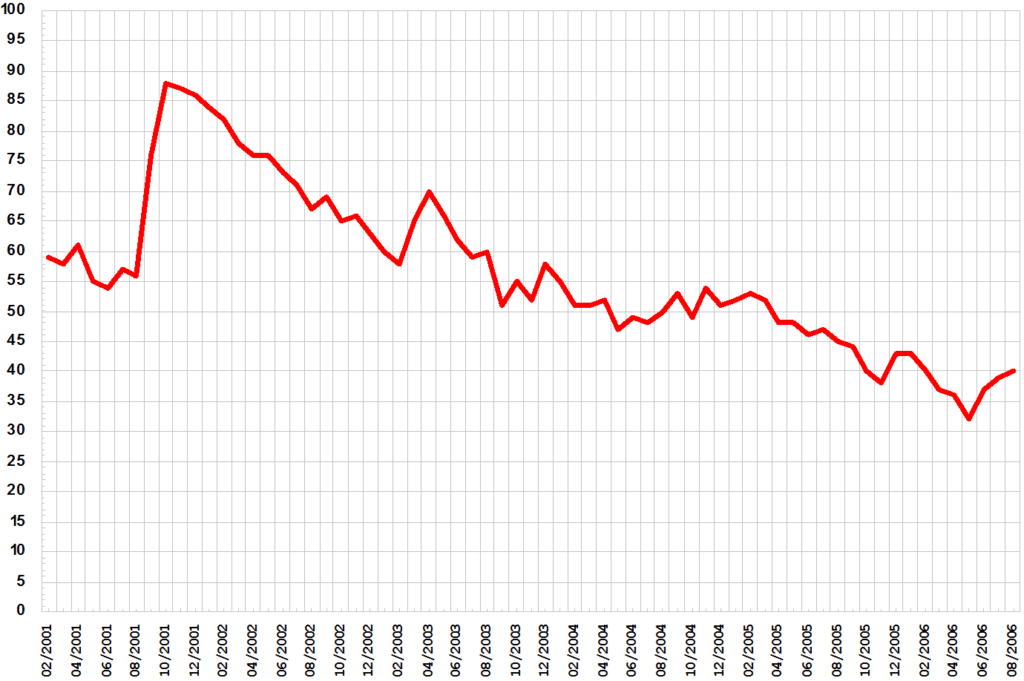
Line Charts are the most fundamental type of forex chart. They typically display the closing prices of currency pairings over a specific period, such as daily, weekly, or monthly.
Each closing price is connected by a straight line, resulting in a continuous line that provides a fundamental overview of price fluctuations. Even though line charts provide a clear view of long-term trends, they lack information on price fluctuations within each trading period.
Bar Charts
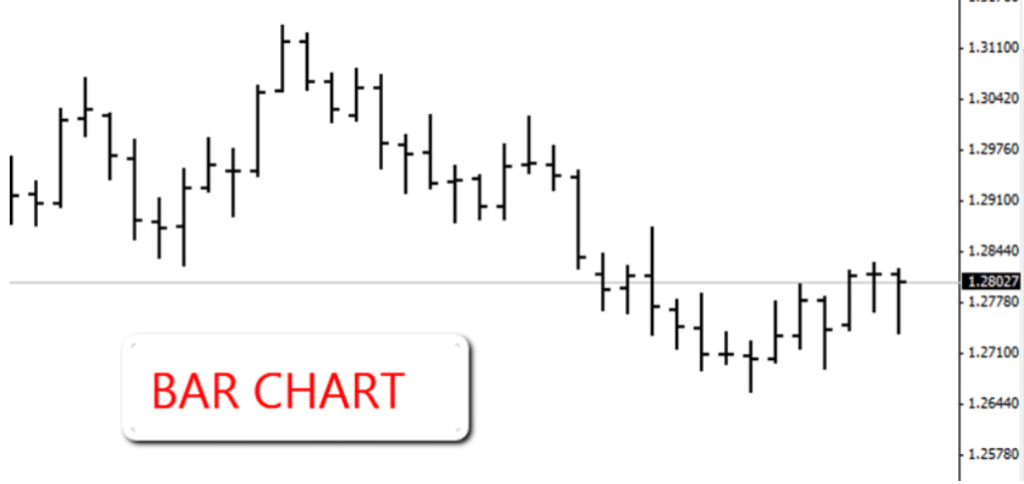
Compared to line charts, bar charts, known as OHLC (Open, High, Low, Close) charts, provide more comprehensive data.
Each bar on the chart represents a specific period and contains four points: the opening price (left side), the highest price achieved during the period (top), the lowest price reached (bottom), and the closing price (right side). Bar charts offer insight into the price range and volatility over a specific period.
Candlestick Charts
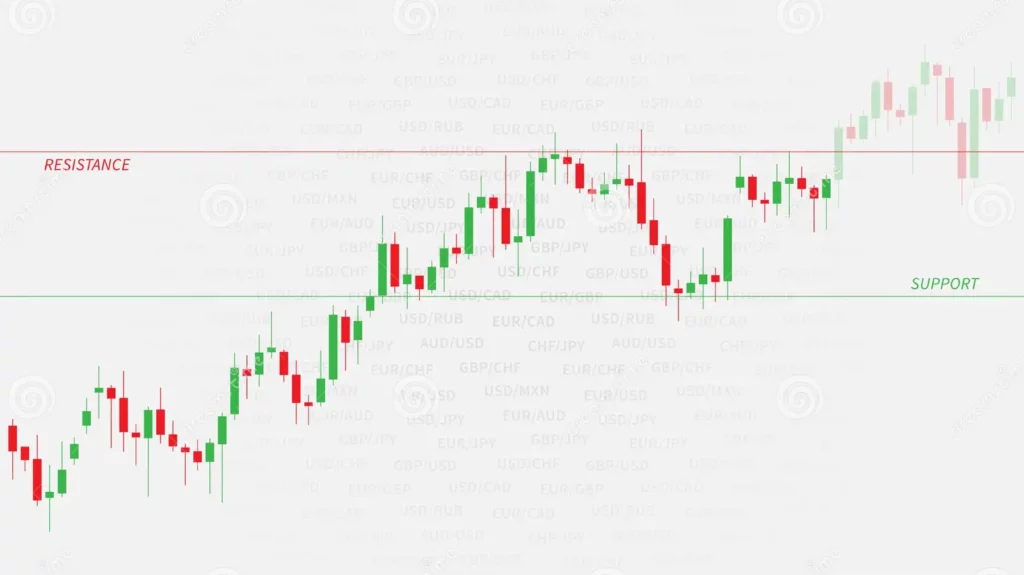
Like bar charts, candlestick charts display OHLC data for each period. Nonetheless, candlestick charts present the data in a more visually enticing manner.
Each period is represented by a candlestick, with the body of the candlestick representing the opening and closing prices and the wicks (or shadows) representing the period’s highest and lowest prices.
The popularity of candlestick charts among traders stems from their capacity to convey crucial information regarding market sentiment and price action.
Technical Indicators
Technical indicators are mathematical computations used by traders to forecast market changes in the future. They provide information on market trends, momentum, volatility, and strength, allowing traders to make more informed judgments.
Moving Averages (MA): Moving Averages smooth out price data over a given period, assisting in determining trend direction. Simple Moving Averages (SMA) and Exponential Moving Averages (EMA) are common varieties.
Relative Strength Index (RSI): The RSI evaluates the speed and change of price movements, indicating whether they are overbought or oversold. Values greater than 70 indicate overbought, while values less than 30 indicate oversold.
Bands of Bollinger: Bollinger Bands comprise a central band (SMA) and two outside bands that are standard deviations distant from the SMA. They aid in the detection of volatility and probable reversals.
MACD (Moving Average Convergence Divergence): The MACD indicator depicts the relationship between two EMAs and aids in determining trend direction and momentum.
Trend Analysis
Trend analysis studies the direction and strength of market movements to forecast future trends. Understanding trends is essential for profitable trading.
Uptrend (Bullish Trend): An uptrend is characterized by higher highs and higher lows, showing that the market is rising.
Bearish Trend (Downtrend): A downtrend is defined by lower highs and lower lows, indicating a sinking market.
A sideways trend happens when the market moves in a horizontal range, not noticeably rising or dropping.
Lines of Trend: Connecting lows in an uptrend or highs in a downtrend to draw trend lines helps visualize and confirm trend direction.
Levels of Support and Resistance
Support and resistance levels are important ideas in technical analysis because they act as price movement obstacles.
Support and Resistance Levels
A support level is a price at which a currency pair stops dropping and may bounce upward. It denotes a region where buying interest outnumbers selling pressure.
A resistance level is where the price normally bottoms out and begins to fall. It represents the moment at which selling interest outnumbers buying pressure.
When a support level is breached, it may transform into resistance and vice versa. This role reversal occurs when traders re-evaluate their strategy in light of new price levels.
Chart Patterns
Chart patterns are formations formed by a currency pair’s price fluctuations over time. Recognizing these trends can provide information regarding probable future price movements.
Head and Shoulders: This pattern has three peaks, with the middle one (the head) being the highest and the other two (the shoulders) being lower. It frequently indicates a trend reversal.
Double Tops and Bottoms: Double Tops form after an extended uptrend and indicate a potential reversal, whereas Double Bottoms form after a downtrend and indicate a potential upward reversal.
Triangles: Ascending, descending, and symmetrical triangles suggest consolidation before a breakout. The breakout direction might predict the next trend.
Flags and pennants are continuation patterns that indicate that the preceding trend will restart after a brief consolidation.
Effective Risk Management for Indonesian Forex Traders
The practice of detecting possible hazards and taking steps to mitigate their impact is known as risk management. Furthermore, it is a critical component of effective trading, particularly in the volatile Forex market.
Understanding Leverage and Margin – Leverage enables Indonesian traders to handle a huge position with little capital but also magnifies possible losses. Understanding how to employ leverage and margin safely is critical for risk management.
Setting Stop-Loss and Take-Profit Orders – Stop-loss orders close a position automatically at a predefined price to limit losses. In contrast, take-profit orders close a position at a predetermined profit level. These tools assist traders in exerting control over prospective outcomes.
Diversification – Risk can be spread by diversifying a portfolio by trading multiple currency pairings or financial assets. If one position underperforms, others may outperform, balancing the entire risk.
Risk-to-Reward Ratio – The risk-to-reward ratio compares a trade’s possible loss to its potential profit. Over time, a good risk-to-reward ratio assures prospective earnings outweigh potential losses.
Using Demo Accounts – Demo accounts enable traders to practice trading without putting real money at risk. They are a wonderful instrument for testing ideas and understanding how various risk management tactics function in different market conditions.
Continuous Education and Analysis – Keeping up to date on market trends, economic developments, and trading tactics allows traders to make more informed judgments. Continuous market analysis enables prompt adjustments to risk management measures.
Emotional Discipline – Making trading decisions based on analysis and strategy rather than emotions such as fear or greed is what emotional discipline entails. Sticking to a trading plan and avoiding impulsive decisions that can lead to unnecessary risks benefit from emotional discipline.
Best Forex Strategies for Indonesian Traders Revealed
Best Forex Trading Strategies for Indonesians Forex trading strategies that have been revealed are critical for market success. They serve to guide trading decisions and manage risks. Here are some of the most effective tactics for Indonesian traders to use.
Trend Following Strategy
Understanding the Trend: This approach entails detecting and trading in the direction of the current market trend, whether upward or downward.
Indicators Used: Moving averages, MACD, and trend lines are prominent indicators for identifying trends.
Suitability: It is appropriate for novice and expert traders because it follows the natural market movement.
Swing Trading Strategy
Trading Short-Term Fluctuations: Swing trading seeks to profit from short-term market changes and typically holds positions for several days.
Indicators Used: Overbought and oversold conditions can be identified using indicators such as the RSI, Stochastic Oscillator, and Bollinger Bands.
Suitability: Ideal for traders who have the leisure to follow the markets regularly but not constantly.
Scalping Strategy
Quick Profits from Small Movements: Scalping involves opening and closing many trades daily to profit from slight price movements.
Indicators Used: Short-term Moving Averages and price action analysis are regularly utilized indicators.
Suitability: Suitable for traders who can devote significant time to market monitoring.
Breakout Strategy
Trading Breakouts from Consolidation: This method entails entering a trade when the price breaks out of a consolidation pattern, such as a triangle or range.
Indicators Used: Support and resistance levels, chart patterns, and volume indicators can be used.
Suitability: This strategy best suits traders who understand chart patterns and can react rapidly to breakouts.
Carry Trade Strategy
Profiting from Interest Rate Differentials: Carry trade involves borrowing in a low-interest-rate currency and investing in a high-interest-rate currency.
Indicators Used: Interest rate differentials, economic indicators, and currency strength can be used as indicators.
Suitability: This strategy best suits long-term traders who comprehend macroeconomic dynamics.
An Introduction to Forex Brokers

Forex brokers act as intermediaries between retail traders and the interbank foreign exchange market, facilitating access to global currency trading through their platforms, tools, and customer support.
Brokers play a vital role in executing forex trades efficiently while ensuring liquidity for traders and guiding them through the market’s intricacies. Below, we will explore a broker’s role and how they make money.
What is the Role of a Forex Broker?
Forex brokers perform various critical functions:
They provide platforms and tools that allow traders to purchase and sell foreign currencies.
Brokers provide leverage, which allows traders to handle large positions with a small amount of capital.
To help traders make informed decisions, several brokers provide research, market analysis, educational tools, and customer assistance.
Regulated brokers follow financial authorities’ laws and regulations, ensuring fair and transparent trading procedures.
How do Forex Brokers Make Money?
Forex brokers earn money in a variety of ways:
Spread: The spread, or the difference between a currency pair’s bid (buy) and ask (sell) prices, is a common source of income for brokers.
Commission: Some brokers impose trade commissions, either as a flat fee or as a percentage of the trade size.
Overnight Financing (Swap Fees): Brokers may charge overnight swap fees depending on interest rate differentials between the two currencies in the pair.
Additional Services Fee: Brokers may charge a fee for additional services such as premium research or managed accounts.
Ask and Bid Price in Forex Trading
Ask and bid prices are fundamental concepts that play a significant role in every Forex transaction. They represent a currency pair’s selling and purchasing price and are fundamental to understanding how foreign exchange transactions function.
Ask Price
When trading in the foreign exchange market, a trader can buy a currency pair at its ask price, commonly called the “offer” price. The seller sets this rate and reflects their minimum selling price for that specific currency pair during that moment in time.
To assess how much it will cost them to acquire a particular currency pairing, traders analyze this offer price. It’s important to note that the offer price is consistently higher than the bid price, indicating sellers’ intent on making profits from these transactions
Bid Price
The offer price is the highest price buyers are willing to pay for a specific currency pair. When traders want to sell a currency pair, they consider this offer price as it indicates their potential profit.
It is worth noting that the bid price is always lower than the asking price since buyers aim to acquire the currency pair at its lowest feasible cost.
Spread and Pips in Forex Trading
Spread and pips are closely related concepts that further describe the Forex trading process.
Spread
As stated, the spread is the difference between the offer and bid prices of a currency pair. It is a direct expense incurred by traders when initiating and exiting trades.
Depending on market conditions, the spread can fluctuate throughout the trading day, and wider spreads typically indicate higher trading costs.
Understanding the spread is necessary for traders to compute potential profits and losses and select currency pairs and brokers compatible with their trading strategy.
Pips
In Forex trading, a pip is a standard measurement unit representing the slightest price movement that a currency pair can experience. A pip corresponds to the fourth decimal place (0.0001) for most currency pairings, but for Japanese yen pairs, it corresponds to the second decimal place (0.01).
Profit and loss in a trade are expressed in terms of pips. Understanding decimals enables traders to quantify price movements, set stop-loss and take-profit levels, and evaluate the effect of market volatility on positions.
An Introduction to Day Trading

Day trading is a style of trading that entails the purchase and sale of financial instruments within the same trading day. The objective is to profit from minute price fluctuations in highly liquid assets, such as currency pairs on the Forex market.
During a typical trading day, day traders execute multiple trades while intently monitoring price charts, economic news, and market trends.
Day trading requires fast decision-making, a thorough knowledge of the markets, and the ability to analyze short-term price fluctuations. Traders must constantly monitor the markets to identify opportunities and manage risks, necessitating a significant time commitment.
Rapid market fluctuations can result in significant losses, making risk management vital in day trading. Many day traders use stop-loss and take-profit orders to limit potential losses and secure profits. Leverage is commonly used to increase returns, but it also increases risk.
Day trading can be profitable, but it is commonly regarded as one of the most difficult trading strategies. It requires a solid trading plan, rigorous discipline, emotional control, and a willingness to invest time in ongoing study and practice.
Additionally, the high frequency of trades means that transaction costs, such as spreads and commissions, can accumulate and impact profitability.
An Introduction to Swing Trading

Swing trading is a trading strategy that seeks to profit from price “swings” or oscillations lasting several days to weeks. In contrast to day trading, where positions are terminated within the same day, swing traders hold positions overnight and frequently for days or weeks.
Swing trading is predicated on the notion that price fluctuations are not linear and that markets move in waves or shifts. Traders identify potential entry and exit points based on technical indicators, chart patterns, and sometimes fundamental analysis.
For swing trading, patience and an acute eye for identifying trends and reversals are required. Traders seek opportunities where they believe the market has temporarily overextended itself and is likely to retrace or continue its trend.
Risk management is essential in swing trading, and stop-loss and take-profit orders are frequently used to secure positions. In contrast to day trading, leverage is typically implemented more conservatively in long-term investing.
Swing trading balances day trading’s rapid tempo and position trading’s longer-term approach.
It is appropriate for those who cannot monitor the markets continuously but still wish to trade actively. It requires knowledge of technical analysis and market trends and the patience to allow transactions to play out over time.
Best Forex Brokers in Indonesia
Best MetaTrader 4 / MT4 Forex Broker in Indonesia

Overall, HFM is the best MT4 Forex Broker in Indonesia. HFM is a popular broker in Indonesia, where traders may use MetaTrader 4 and trade in one thousand different CFDs. As a result, traders can take advantage of competitively cheap costs and tight spreads.
Best MetaTrader 5 / MT5 Forex Broker in Indonesia

Overall, BDSwiss is the best MetaTrader 5 Forex Broker in Indonesia. On the MT5 platform provided by BDSwiss, traders of CFDs are free to employ any strategy they see fit.
For Indonesian traders of all experience levels, BDSwiss provides access to their extensive library of research, educational, and trading tools.
Best Forex Broker for Beginners in Indonesia

Overall, IG is the best Forex Broker for beginners in Indonesia. IG provides various services to help traders of all skill levels, such as trading tools and educational content. Indonesians can also register a free demo account to practice trading and test strategies.
Best Low Minimum Deposit Forex Broker in Indonesia

Overall, FXTM is the best Low Minimum Deposit Forex Broker in Indonesia. An Indonesian can open an FXTM trading account for as little as 150,000 IDR ($10). Furthermore, FXTM provides secure deposit and withdrawal options using trusted payment processors.
Best ECN Forex Broker in Indonesia

Overall, OctaFX is the best ECN Forex Broker in Indonesia. The finest liquidity providers’ prices are used by OctaFX, an NDD broker that offers STP and ECN execution. This means that the minimum spread on major currency pairs (such as the EUR/USD) should be zero pips on all exchanges.
Best Islamic / Swap-Free Forex Broker in Indonesia

Overall, eToro is the best Islamic / swap-free Forex Broker in Indonesia. eToro provides access to about 3,000 financial products across various asset types (equities, cryptocurrencies, etc.).
Muslims can avoid exchange costs while trading halal instruments by changing their live accounts to the eToro Islamic option.
Best Rebates Broker in Indonesia

Overall, Exness is the Best CFD Rebates Broker in Indonesia. Indonesians can take advantage of rebates up to 100 per lot, or 20% of the spread when opening a Standard, Standard Cent, Raw Spread, or Zero Account with Exness.
Best IDR Trading Account Forex Broker in Indonesia
Overall, SuperForex is the best IDR Trading Account Forex Broker in Indonesia. Indonesian traders can register a Swap-Free Account with SuperForex, allowing them to trade using IDR as their account base currency. Furthermore, traders have access to local payment options in IDR.
Best Lowest Spread Forex Broker in Indonesia

Overall, Pepperstone is the best lowest spread Forex Broker in Indonesia. Pepperstone is a popular CFD broker offering traders various instruments with spreads as low as 0 pip on the most traded pairs.
Technical and fundamental assessments can be conducted with Pepperstone’s many trading tools and specialized learning sites.
Best Nasdaq 100 Forex Broker in Indonesia

Overall, Libertex is the best Nasdaq 100 CFD Broker in Indonesia. Libertex offers 0 pip spreads on the Nasdaq 100 and other indexes. Nasdaq trading is also possible on state-of-the-art platforms, including Libertex, MetaTrader 4, and MetaTrader 5.
Best Volatility 75 / VIX 75 Forex Broker in Indonesia

Overall, AvaTrade is Indonesia’s best Volatility 75 / VIX 75 Forex Broker. Regarding the VIX 75 index as a CFD instrument, AvaTrade gives Indonesian retail traders a leverage of up to 1:20, with spreads from 0.15%.
Best NDD Forex Broker in Indonesia

Overall, FP Markets is the best NDD Forex Broker in Indonesia. Regarding NDD brokers, FP Markets is the best option for scalpers, hedgers, and automated traders.
In addition to low commission rates ($3–$3.5 per trade), FP Markets provides competitively low spreads on ECN execution.